
Foot or Ankle Pain Relief
Struggling with Foot or Ankle Pain?
If you’re experiencing foot and ankle pain, you might be wondering:
“Why is this happening to me?”
“Why am I still suffering after six months or more?”
Many people believe their foot or ankle pain will vanish on its own, hoping that one day they’ll wake up pain-free. Yet, months later, they often find the pain has only worsened.
Does This Sound Like You?
A common situation I see in my clinic here in Athlone involves people who visit their doctor, are told to rest, and are given painkillers — only to return six weeks later with the same pain, sometimes even worse, and often receiving a stronger prescription. This cycle is especially common with foot and ankle issues.
Often, conventional physiotherapy treatments provide some benefit for people, but for many, they’re simply not enough on their own to address the deeper movement, strength, or biomechanical factors causing the pain. That’s where a more comprehensive approach becomes essential.
In my clinic, we take a deeper dive into movement patterns, neuromuscular function, and progressive strength rehabilitation, helping people who haven’t fully improved with standard advice or basic physio-style exercises. This more detailed approach often uncovers the root cause that traditional paths may not fully resolve.
Has This Happened to You?
You might be confused due to conflicting advice from various sources. Perhaps you think the pain is in your foot, but the issue actually lies in your ankle or Achilles tendon. This confusion often leads to procrastination and accepting pain as a normal part of life.
Is This How You Feel?
If you’re currently dealing with foot and ankle pain, here are seven reasons why it might be lasting longer than it should:
- You thought it would go away on its own, but it didn’t.
- You went to the doctor, who advised rest and painkillers, but the pain returned once the medication wore off.
- A family member or friend told you that foot and ankle pain is normal with age, so you accepted it.
- You sought help from other healthcare professionals, such as physiotherapists or physical therapists in Athlone, but nothing seemed to help.
- You’ve tried using heat pads or TENS units, but they didn’t alleviate the pain.
- You believed resting would help, but the pain still irritates you daily.
- You tried getting massages, which felt nice but didn’t provide long-term relief.
If any of these situations sound familiar, we’d love to help you.
Book a call with us to discuss your options. Knowing what doesn’t work brings you closer to finding what does. Click here to book a call with us for solid advice.
What Can You Do to Get Rid of Foot and Ankle Pain?
Here are four steps you can take:
Decide to get help:
Don’t wait and hope your foot or ankle pain will magically disappear. Many people delay seeking support, only to realise the pain has gradually become worse and harder to manage.
Do the right exercises:
Progressive, targeted exercises — the kind commonly used in physiotherapy and physical therapy settings — can reduce pain and improve mobility when applied correctly. As a neuromuscular therapist and strength & conditioning coach, I design personalised exercise plans using these evidence-based principles, adapted specifically for your needs.
Avoid poor posture and awkward sleeping positions:
Bad sitting or standing habits, as well as awkward sleeping positions, can aggravate foot and ankle issues. Restoring strength, alignment, and movement control — along with effective hands-on treatment — helps protect you from recurring pain and keeps you active.
Get real, hands-on rehab:
My approach focuses on proven neuromuscular therapy techniques combined with strength and conditioning methods often seen in physio-led rehabilitation. I work with foot and ankle pain every day.
If your pain affects your job, sleep, daily activity, or quality time with loved ones, this type of rehab can help you regain confidence and movement again.
Ready to take the next step?
Contact our pain clinic in Athlone on +353 86 7338963 or BOOK AN APPOINTMENT
What Our Customers Say

Paul Hayden

Christine McArdle

A MESSAGE FROM ATHLONE’S LEADING PAIN, MOVEMENT & INJURY SPECIALIST
KIERAN MCNALLY
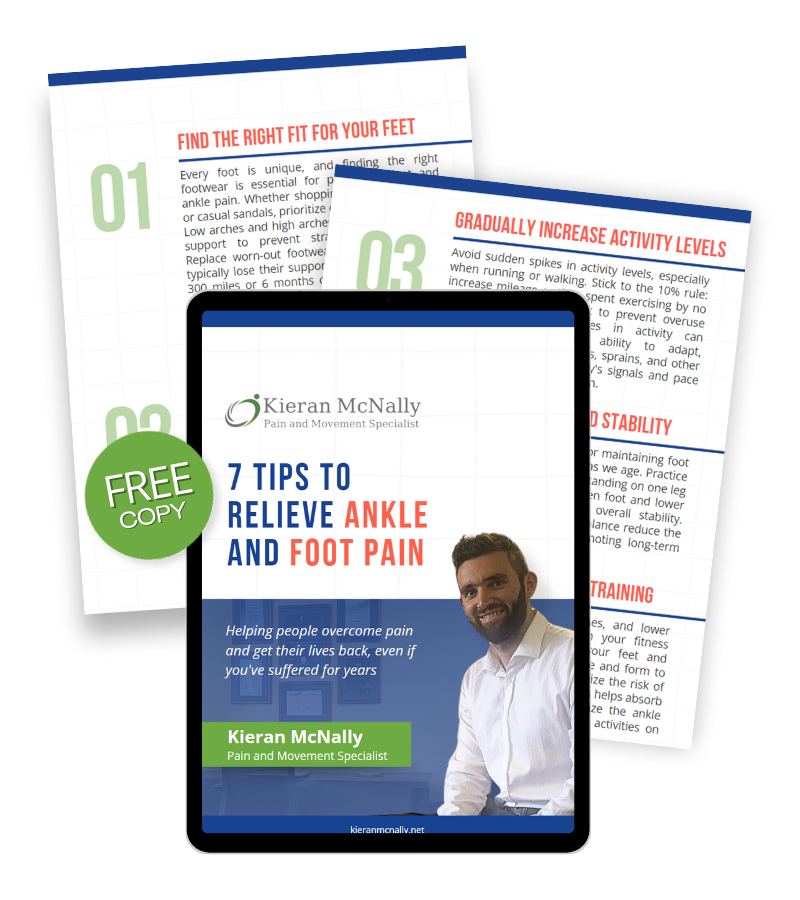
If you’re dealing with persistent foot or ankle pain — whether sharp, aching, or stopping you from walking properly — this guide is designed specifically for you.
Maybe you were told to rest, ice it, take pain medication or just “walk it off,” yet nothing made a real difference. Often, people with foot or ankle issues find that these generic recommendations actually make the problem worse.
Foot and ankle pain can be incredibly confusing:
Should I keep moving? Is this related to my arch? Is it a ligament? Is it tendon pain? Could it be plantar fasciitis? Will exercise help — or make it worse?
For over 12 years, I’ve helped people aged 35–65+ throughout Athlone and surrounding areas find relief from chronic and recurring foot and ankle pain through neuromuscular therapy, movement retraining, and progressive strength rehab. As a strength & conditioning coach, I also incorporate targeted rehab strategies that are commonly used in physio and physical therapy settings — adapted appropriately for neuromuscular therapy.
Through my work, I’ve seen that the typical cycle of rest, medication, and hoping it goes away rarely addresses the root cause of ongoing foot and ankle issues. And despite what many are told, these problems are not just a normal part of getting older, and they’re not something you simply have to put up with.
That’s why I created this straightforward, easy-to-follow guide to help you understand how to finally break free from foot and ankle pain — naturally, without needing medication or surgery.
Foot and ankle pain can disrupt your ability to move, walk comfortably, exercise, stand at work, or even enjoy time out with friends and family. You shouldn’t have to plan your day around your pain — or avoid activities because of it.
If you’re ready to start improving, you can download this free physio-style guide and begin your journey toward stronger, more comfortable movement — using safe, effective strategies inspired by rehabilitation principles and delivered through neuromuscular therapy.
Wishing you the very best,
Kieran